
Category: Bitcoin Mining with Bitaxe

Open-source ASIC Bitcoin mining guides, hardware updates, firmware releases, and community news.

  • Bitaxe Community Update – Mid‑June 2026

    Bitaxe Community Update – Mid‑June 2026

    Bitaxe’s mid-June 2026 update centers on firmware maintenance, with ESP-Miner v2.8.1 fixing a memory leak and continuing gradual improvements to diagnostics, the web UI, and miner stability. The project remains actively supported, with changes aimed at making existing hardware easier to run reliably. This is part of the overall Bitaxe community update.

    Bitaxe also stays visible in solo-mining coverage and ongoing discussion of BM1373-based future hardware. No broadly available new BM1373 release appears to have launched yet, but the current lineup remains relevant while the next generation takes shape.

    Bitaxe’s mid-June 2026 update centers on firmware maintenance, with ESP-Miner v2.8.1 fixing a memory leak and continuing gradual improvements to diagnostics, the web UI, and miner stability. The project remains actively supported, with changes aimed at making existing hardware easier to run reliably. This is part of the overall Bitaxe community update.

    Bitaxe also stays visible in solo-mining coverage and ongoing discussion of BM1373-based future hardware. No broadly available new BM1373 release appears to have launched yet, but the current lineup remains relevant while the next generation takes shape.

    Over the past month, the Bitaxe ecosystem has kept advancing mainly through firmware polish, stability work, and continuing discussion around next-generation hardware rather than through a major new public board launch. The clearest concrete development since mid-May is a fresh ESP-Miner release in early June, while Bitaxe remains prominent in ongoing solo-mining coverage and BM1373 speculation.

    Firmware and ESP‑Miner progress

    The biggest software change since the last update is the ESP-Miner v2.8.1 release, published on June 6, 2026. Its headline fix is a memory leak in the info API, making this a practical maintenance release for miners who want better long-run stability rather than flashy new features.

    That release builds on a broader pattern already visible in recent ESP-Miner updates: better diagnostics, gradual web UI cleanup, and improvements to miner behavior under normal day-to-day operation. Recent release notes also point to refinements such as expected hashrate reporting, dashboard cleanup, and other quality-of-life fixes that make Bitaxe easier to monitor and tune.

    For most hobby miners, the main takeaway is straightforward: the firmware is still actively maintained, and recent work is focused on making existing hardware more reliable and easier to manage. That is less dramatic than a new hardware drop, but it is exactly the kind of progress that matters for 24/7 desk or shelf miners.

    Solo-mining narrative keeps growing

    Bitaxe also continues to appear in current solo-mining coverage as an example of the “small miner, real chance” category. A June 2026 report on solo-mining successes specifically mentions the Bitaxe Gamma 601 as an open-source option, putting Bitaxe right in the middle of the ongoing discussion about hobby miners still landing full block rewards in 2026.

    That is important because it reinforces the shift in how Bitaxe is perceived. It is no longer just an experimental curiosity for hardware tinkerers; it is increasingly treated as a recognizable platform in the broader story of solo Bitcoin mining and mining decentralization.

    For readers following the project casually, the story has not changed much in principle, but it has become more credible in practice: tiny miners still face extremely long odds, yet Bitaxe remains one of the devices most often cited when people talk about those odds actually paying off.

    Hardware outlook: BM1373 still the big question

    On the hardware side, the most persistent discussion remains the BM1373 ASIC and what it could mean for the next generation of Bitaxe-style miners. Community chatter and enthusiast posts continue to point to BM1373 as the likely foundation for future small-form-factor miners, with recurring claims of meaningfully better hashrate and efficiency than current BM1370-based designs.

    At the same time, there still does not appear to be a clear Bitaxe.org announcement of a broadly available new BM1373-based release in the last 30 days. In other words, the direction of travel looks increasingly obvious, but the present market is still defined mainly by current-generation hardware and anticipation rather than a fully arrived next wave.

    That makes mid-June feel like a transition point. The current Bitaxe lineup remains relevant and actively supported, while the next chapter is becoming easier to see even if it is not fully on the shelf yet.

    Broader mining backdrop

    Outside the Bitaxe project itself, the wider Bitcoin mining environment may give hobby miners a slightly more interesting near-term backdrop. One June 9 report projected a roughly 11% Bitcoin difficulty drop around June 14, which can improve sentiment around solo mining even if it does not fundamentally change the long odds for any one small machine.

    For Bitaxe users, that broader context matters mostly as morale and math rather than as product news. Firmware is improving, the solo-mining story remains active, and the community is clearly looking ahead to what BM1373-based designs could bring next.

    Here’s a blog-ready version in the same concise, reader-facing style as your mid-May post.

    Bitaxe Community Update – Mid‑June 2026

    Over the past month, the Bitaxe ecosystem has kept advancing mainly through firmware polish, stability work, and continuing discussion around next-generation hardware rather than through a major new public board launch. The clearest concrete development since mid-May is a fresh ESP-Miner release in early June, while Bitaxe remains prominent in ongoing solo-mining coverage and BM1373 speculation.

    Firmware and ESP‑Miner progress

    The biggest software change since the last update is the ESP-Miner v2.8.1 release, published on June 6, 2026. Its headline fix is a memory leak in the info API, making this a practical maintenance release for miners who want better long-run stability rather than flashy new features.

    That release builds on a broader pattern already visible in recent ESP-Miner updates: better diagnostics, gradual web UI cleanup, and improvements to miner behavior under normal day-to-day operation. Recent release notes also point to refinements such as expected hashrate reporting, dashboard cleanup, and other quality-of-life fixes that make Bitaxe easier to monitor and tune.

    For most hobby miners, the main takeaway is straightforward: the firmware is still actively maintained, and recent work is focused on making existing hardware more reliable and easier to manage. That is less dramatic than a new hardware drop, but it is exactly the kind of progress that matters for 24/7 desk or shelf miners.

    Solo-mining narrative keeps growing

    Bitaxe also continues to appear in current solo-mining coverage as an example of the “small miner, real chance” category. A June 2026 report on solo-mining successes specifically mentions the Bitaxe Gamma 601 as an open-source option, putting Bitaxe right in the middle of the ongoing discussion about hobby miners still landing full block rewards in 2026.

    That is important because it reinforces the shift in how Bitaxe is perceived. It is no longer just an experimental curiosity for hardware tinkerers; it is increasingly treated as a recognizable platform in the broader story of solo Bitcoin mining and mining decentralization.

    For readers following the project casually, the story has not changed much in principle, but it has become more credible in practice: tiny miners still face extremely long odds, yet Bitaxe remains one of the devices most often cited when people talk about those odds actually paying off.

    Hardware outlook: BM1373 still the big question

    On the hardware side, the most persistent discussion remains the BM1373 ASIC and what it could mean for the next generation of Bitaxe-style miners. Community chatter and enthusiast posts continue to point to BM1373 as the likely foundation for future small-form-factor miners, with recurring claims of meaningfully better hashrate and efficiency than current BM1370-based designs.

    At the same time, there still does not appear to be a clear Bitaxe.org announcement of a broadly available new BM1373-based release in the last 30 days. In other words, the direction of travel looks increasingly obvious, but the present market is still defined mainly by current-generation hardware and anticipation rather than a fully arrived next wave.

    That makes mid-June feel like a transition point. The current Bitaxe lineup remains relevant and actively supported, while the next chapter is becoming easier to see even if it is not fully on the shelf yet.

    Broader mining backdrop

    Outside the Bitaxe project itself, the wider Bitcoin mining environment may give hobby miners a slightly more interesting near-term backdrop. One June 9 report projected a roughly 11% Bitcoin difficulty drop around June 14, which can improve sentiment around solo mining even if it does not fundamentally change the long odds for any one small machine.

    For Bitaxe users, that broader context matters mostly as morale and math rather than as product news. Firmware is improving, the solo-mining story remains active, and the community is clearly looking ahead to what BM1373-based designs could bring next.

    In summary, this Bitaxe community update reflects ongoing progress in firmware maintenance and community discussions surrounding the future of Bitaxe and its ecosystem.

    Interested in hands-on learning? If you enjoy building and experimenting with technology, check out RadioBook — our complete amateur radio learning system with interactive browser-based experiences. Learn ham radio the modern way with five practical books and twelve interactive games.

    Want to learn more about Bitcoin mining? Check out Bitcoin Mining with Bitaxe — a practical, beginner-friendly guide to building and running your own Bitaxe miner at home. And if you’re looking for other practical tech guides, browse the full Tartanleaf collection.

    Missed last month’s update? Read the Bitaxe Community Update – May 2026 for earlier firmware and hardware news.
  • Bitaxe Community Update – Mid‑May 2026

    Bitaxe Community Update – Mid‑May 2026

    Over the past few weeks the Bitaxe ecosystem has kept up a steady pace of firmware work, tuning, and future‑hardware discussion, even without a brand‑new board release. Here are the key highlights for hobbyists and solo miners.

    Firmware and ESP‑Miner progress

    Development on the ESP‑Miner firmware (the core firmware for Bitaxe boards) continues at a rapid clip. The Bitaxe.org GitHub org remains very active, with ongoing changes across the miner core, web UI, and API.github+1

    • The current “early access” branch for 2026 is being treated as a canary / preview line rather than a stable release. Maintainers explicitly flag it as test‑only, with merged pull requests reflecting in‑progress features for adventurous users.
    • Recent ESP‑Miner release notes emphasize quality‑of‑life improvements: better pool‑failover behavior, clearer log messages, and refinements to the built‑in self‑test and fan control routines. This includes fixes to self‑test timeouts, improved reporting of current and voltage, and small UI adjustments.

    For most home miners, the takeaway is that firmware is still evolving, with more attention on stability, diagnostics, and pool behavior rather than on headline‑grabbing features.

    Overclocking and performance tuning

    Late‑March and early‑April content has turned into practical tuning guidance that’s still very current in May. Solo Satoshi posted a detailed 2026 overclocking guide that walks through safe voltage and frequency bands for the current Bitaxe lineup, including Gamma, Supra, Ultra, Hex, and GT.

    • The guide breaks out per‑model suggestions instead of one “max everything” setting, and repeatedly stresses realistic PSU sizing, cooling, and 24/7 stability.
    • Community posts and vendor guides now converge on the idea that fine‑tuned firmware + airflow + good PSUs matter as much as raw MHz when you’re trying to squeeze more GH/s out of BM1368/BM1370 boards without cooking them.d‑central+1

    If you’re already running current firmware, the main “new” value here is better, battle‑tested reference points for long‑term stable clocks rather than guesswork.

    Bitaxe in solo‑mining discussions

    Even though no new Bitaxe hardware has dropped in the last month, Bitaxe still features prominently in fresh solo‑mining coverage:

    • A May 2026 deep‑dive on solo mining uses Bitaxe and NerdQAxe setups as concrete examples, citing six documented solo block wins by open‑source miners (Bitaxe Ultra, Bitaxe Gamma, clusters, NerdQAxe++ and similar) between March 2025 and early 2026.millionminer+1
    • Those pieces drive home the same point many in the community have been making: the odds are long, but real blocks have been found by “hand‑sized” miners, anchoring all the probability calculators in actual outcomes.d‑central+1

    From a narrative standpoint, Bitaxe has shifted from “experimental curiosity” to a case‑study device for realistic solo‑mining odds.

    Hardware outlook: BM1373 on the horizon

    On the hardware side, the last few weeks have brought more talk about the next generation of chips rather than boards you can buy today:

    • A late‑April community update highlighted Bitmain’s new BM1373 ASIC, noting that it’s expected to power upcoming Bitaxe and NerdQAxe designs.
    • The same discussion mentions that as BM1373‑based gear approaches market, BM1370‑based miners are already seeing price pressure, making current‑gen boards more affordable for hobbyists.

    Nothing is shipping yet under the Bitaxe.org banner with BM1373, but it’s now being discussed explicitly as the likely foundation for “next‑wave” Bitaxe and NerdQAxe hardware.

    Market / ecosystem context

    Broader miner roundups and buying guides updated this year still place Bitaxe firmly in the 2026 hobby‑mining landscape:

    • Recent USB/BTC‑miner guides list the Bitaxe Gamma series as a standout for hobby solo mining, quoting ~1.1–1.3 TH/s at around 18–20 W, and positioning it as an efficient, open‑source alternative in a market full of proprietary sticks.
    • Bitaxe comparison and buying guides from early 2026 continue to describe Gamma and GT as the “serious solo” options, with Supra and Ultra remaining popular, mature boards for entry‑level and tinkering.d‑central+1

    For anyone just discovering Bitaxe now, that means the current generation is still very relevant while the community quietly prepares for BM1373‑based successors.

    Want to start mining? If you’re ready to build your own Bitaxe, check out the Bitcoin Mining with Bitaxe guide for a complete beginner-friendly walkthrough. And for the latest news, see the June 2026 community update.

    Bitaxe Community Update May 2026

  • Bitcoin Mining with Bitaxe — Now Available!

    Bitcoin Mining with Bitaxe — Now Available!

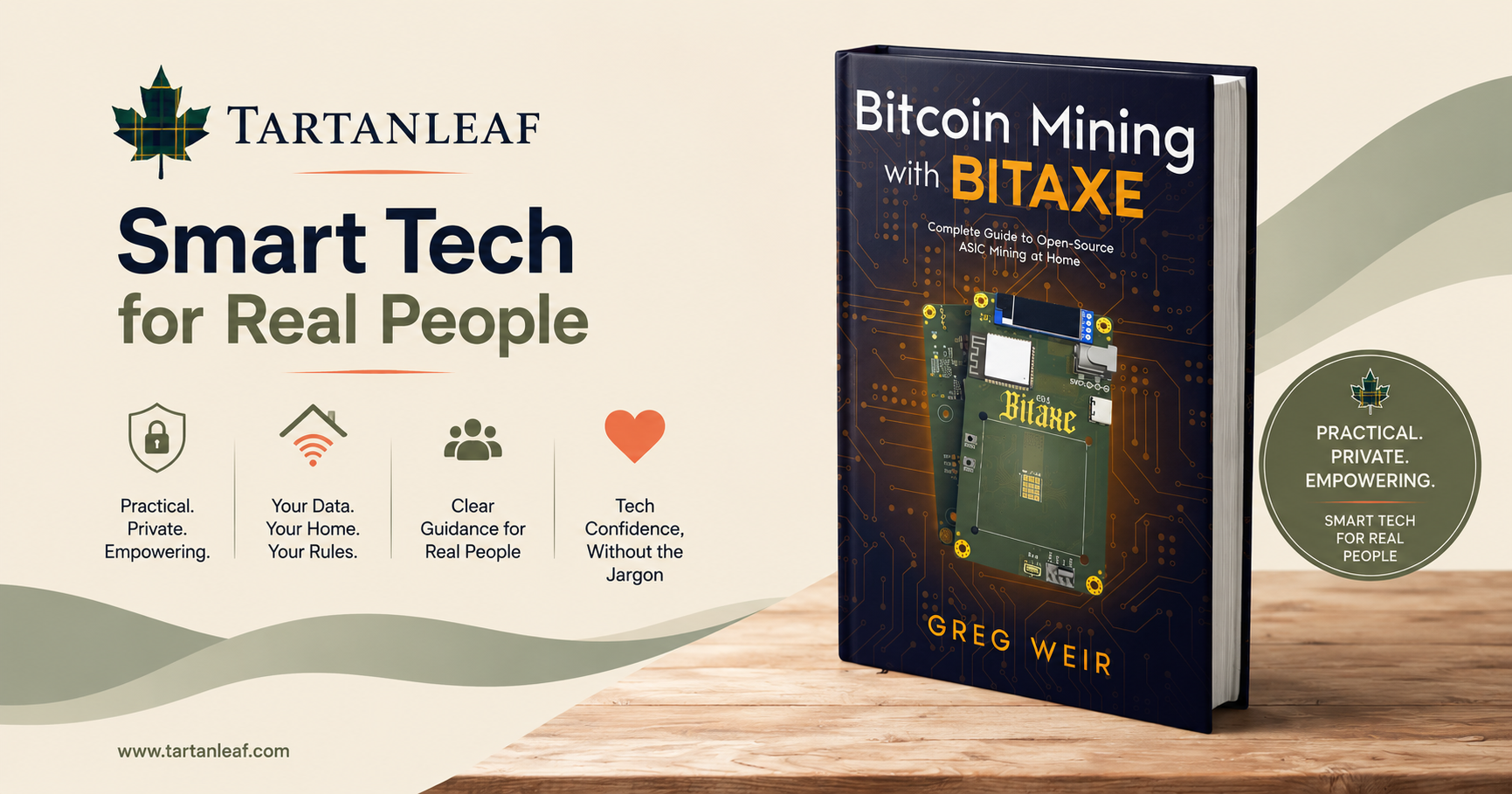
    A new book, Bitcoin Mining with Bitaxe, has been released after a delay caused by the work of writing, building the site, testing hardware, and making the examples reproducible. It is presented as a practical, beginner-friendly guide to building and running a Bitaxe miner at home and understanding Bitcoin mining.

    The book explains solo mining as a low-probability technical lottery while emphasizing it as a hands-on way to learn proof-of-work and experiment with low-power hardware. The post also points readers to the book’s Amazon listing and supporting page, and says it begins a broader series of practical guides.

    A new book, Bitcoin Mining with Bitaxe, has been released after a delay caused by the work of writing, building the site, testing hardware, and making the examples reproducible. It is presented as a practical, beginner-friendly guide to building and running a Bitaxe miner at home and understanding Bitcoin mining.

    The book explains solo mining as a low-probability technical lottery while emphasizing it as a hands-on way to learn proof-of-work and experiment with low-power hardware. The post also points readers to the book’s Amazon listing and supporting page, and says it begins a broader series of practical guides.

    A new book, Bitcoin Mining with Bitaxe, has been released after a delay caused by the work of writing, building the site, testing hardware, and making the examples reproducible. It is presented as a practical, beginner-friendly guide to building and running a Bitaxe miner at home and understanding Bitcoin mining.

    The book explains solo mining as a low-probability technical lottery while emphasizing it as a hands-on way to learn proof-of-work and experiment with low-power hardware. The post also points readers to the book’s Amazon listing and supporting page, and says it begins a broader series of practical guides.

    The release of the Bitcoin Mining with Bitaxe book has been anticipated for a while, and it finally brings fresh insights to the mining community.

    Today, though, I finally get to share the reason for the silence.

    My new book, Bitcoin Mining with Bitaxe, is now available.

    One of the key topics covered in the Bitcoin Mining with Bitaxe book is the importance of selecting the right hardware for mining tasks.

    By following the strategies in the Bitcoin Mining with Bitaxe book, new miners can enhance their chances of success.

    This project started as a simple idea: create a clear, practical guide that helps real people understand Bitcoin mining without needing a warehouse full of hardware or a background in electrical engineering. Along the way, it grew into something bigger — a complete, beginner‑friendly walkthrough of building and running a Bitaxe miner at home, understanding the real odds of solo mining, and learning how Bitcoin’s proof‑of‑work system actually functions.

    Readers will find that the Bitcoin Mining with Bitaxe book answers many common questions about the mining process.

    Check out the Bitcoin Mining with Bitaxe book to see how it can demystify the complexities of mining.

    Explore the Insights of the Bitcoin Mining with Bitaxe book

    The Bitcoin Mining with Bitaxe book contains valuable resources for anyone looking to start their mining journey.

    Learn more about the Bitcoin Mining with Bitaxe book and its relevance in today’s digital landscape.

    As you explore the book, consider how the Bitcoin Mining with Bitaxe book can influence your mining techniques.

    For those interested in learning more, the Bitcoin Mining with Bitaxe book provides comprehensive insights and practical tips.

    The book is honest about the numbers. Solo mining is a long shot — a kind of technical “lottery” with very poor odds. But it’s also a fun, low‑power, hands‑on way to learn how mining works, experiment with hardware, and participate in Bitcoin in a way most people never do.

    If that sounds interesting, you can find the book here:

    👆 Global Amazon link:
    https://kdpbook.link/for/B0GXFMJF53

    And you can see the cover, details, and supporting material on the book’s page:

    👆 https://www.tartanleaf.com/bitcoin-mining-with-bitaxe/

    This release also marks the beginning of something I’ve wanted to build for a long time: a series of practical, approachable guides under the Smart Tech for Real People banner. You can browse all Tartanleaf books to see what else is in the works. More on that soon — now that the first book is out the door, the rest of the pieces can finally start to fall into place.

    If you pick up the book, I hope you enjoy it. If you’ve been waiting for this update, thank you for your patience. And if you’re curious about what’s coming next, stay tuned — this is just the beginning.

  • bitcoin-mining-with-bitaxe-updates

    bitcoin-mining-with-bitaxe-updates

    A living update thread accompanies the Bitaxe mining guide with clarifications, corrections, and new notes that reflect changes in hardware, firmware, tuning, and troubleshooting. It is meant to keep the printed book current as the open-source mining ecosystem evolves.

    The post says future entries will cover hardware revisions, firmware updates, efficiency addendums, dashboard integrations, and reader questions. It also announces upcoming notes on recent firmware changes and updated tuning ranges for Gamma boards.

    bitaxeboard

    Bitcoin Mining with Bitaxe — Living Updates, Addendums, and Ongoing Notes

    The world of open‑source ASIC mining moves fast — faster than any printed book can keep up with. New Bitaxe revisions appear, firmware evolves, dashboards improve, and the OSMU community continues to push the boundaries of what small‑scale miners can do at home.

    This post marks the beginning of a living update thread for Bitcoin Mining with Bitaxe: The Complete Guide to Open‑Source ASIC Mining at Home, Beginner to Advanced. Think of it as the book’s companion log: a place where I can publish clarifications, corrections, new examples, expanded explanations, and notes on hardware or firmware changes that arrive after the book goes to print.

    If you’re reading the book and want the freshest information, this is where you’ll find it.


    Why This Thread Exists

    A printed guide can give you a solid foundation — and that’s exactly what the book aims to do — but Bitaxe is a rapidly evolving open‑hardware project. Since the earliest Max boards, the pace of development has only accelerated. New boards, new tuning ranges, new dashboards, new node integrations, and new community tools appear constantly.

    Rather than waiting for a second edition, this thread lets me:

    • Publish addendums to specific chapters
    • Share updated tuning tables or efficiency ranges
    • Note firmware changes that affect setup or operation
    • Add new troubleshooting patterns as they emerge
    • Highlight new Bitaxe variants or open‑hardware siblings
    • Provide clarifications based on reader questions
    • Link to new community resources worth knowing about

    It keeps the book alive — and keeps you informed.


    What You’ll Find Here

    As updates accumulate, this thread will grow into a structured reference. Expect entries such as:

    • Hardware Updates

    New Bitaxe revisions, Turbo variants, Hex developments, or changes in recommended PSUs, fans, or accessories.

    • Firmware Notes

    Changes to AxeOS, new features, new configuration fields, or updated flashing instructions.

    • Tuning & Efficiency Addendums

    Revised frequency/voltage bands, updated J/TH ranges, or new insights from community testing.

    • Troubleshooting Expansions

    Additional patterns, new error messages, or improved diagnostic steps.

    • Node & Dashboard Integrations

    Updates to Umbrel, Raspiblitz, Home Assistant, Prometheus exporters, or new monitoring tools.

    • Clarifications & Reader Questions

    Short explanations that didn’t fit neatly into the book but help deepen understanding.

    Each update will be timestamped and linked back to the relevant chapter or appendix.


    How to Use This Thread

    If you’re reading the book:

    • Treat this thread as a living appendix
    • Check back periodically for new entries
    • Use it to cross‑reference your setup or troubleshooting
    • Follow along as the Bitaxe ecosystem evolves

    If you’re new to Bitaxe:

    • This thread gives you a sense of how quickly the project grows
    • It also shows how open‑source hardware benefits from community iteration

    If you’re an experienced miner or builder:

    • You may find new tools, dashboards, or firmware branches worth exploring
    • And if you spot something worth adding, feel free to reach out

    First Updates Coming Soon

    I’ll begin posting the first addendums shortly — including notes on recent firmware changes, updated tuning ranges for Gamma boards, and a few clarifications that didn’t make it into the manuscript.

    Thanks for being part of this project.
    Open‑source mining thrives when knowledge is shared, improved, and kept alive — and this thread is one more way to do exactly that.