

Smart Tech for Real People · Available Now
A Home Network You Can Understand—and Fix
Home Networking explains Wi-Fi, routers, mesh systems, security, and troubleshooting in plain language—so you can improve reliability without changing everything at once.
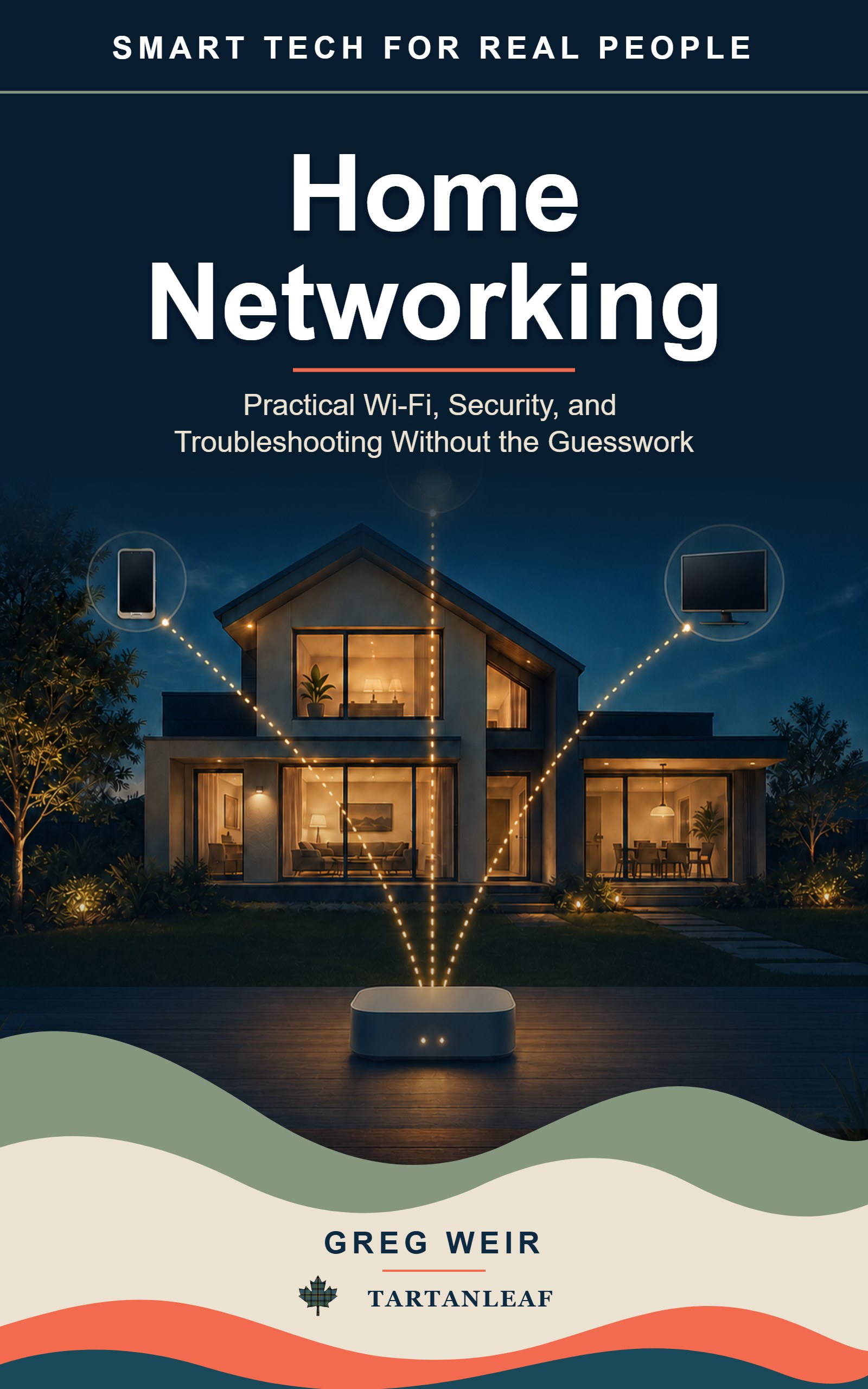
Available Now
A practical, plain-language guide to building a more reliable and secure home network—and knowing what to check when it does not behave as expected.
Choose how to get the book
Buy on Amazon — Kindle or paperback
Amazon will direct you to your local marketplace where available.
Order through a bookstore or library
The paperback is available to order through bookstores and libraries supplied by Ingram. Ask your preferred bookseller or library to search by title, author, or paperback ISBN 978-1-997095-02-6.
First edition · Kindle and paperback · Plain-language explanations · Practical troubleshooting workflows
Start with the failing part
Before replacing a router or changing several settings, identify which part of the network path is actually failing. This short explainer shows a practical sequence for narrowing the problem and testing one reversible change at a time.
What This Book Covers
- How Home Internet Works — Modems, routers, switches, and how data flows into and through your home
- Wi-Fi Fundamentals — Bands, channels, standards, and why your signal varies from room to room
- Router Setup and Configuration — Initial setup, admin access, firmware updates, and essential settings
- Improving Wi-Fi Coverage — Extenders, mesh systems, placement tips, and eliminating dead zones
- Network Security — Encryption, guest networks, parental controls, and keeping intruders out
- Bandwidth and Speed — Understanding your internet plan, testing speed, and managing heavy usage
- Wired vs. Wireless — When to use Ethernet, Powerline, MoCA, and hybrid setups
- IoT and Smart Home Devices — Connecting smart devices safely and managing their network access
- Troubleshooting Common Problems — Slow speeds, dropped connections, interference, and step-by-step fixes
Who This Book Is For
- Homeowners and renters who want reliable internet throughout their space
- Parents managing multiple devices and users on one connection
- Remote workers who depend on stable video calls and file transfers
- Smart home enthusiasts connecting dozens of IoT devices
- Anyone tired of buffering, dropped calls, or confusing router settings
What Makes This Book Different
- No networking degree required — Explains protocols and standards in plain language
- Visual and practical — Diagrams, screenshots, and real home layout examples
- Budget-conscious — Recommendations from free tweaks to worthwhile upgrades
- Security-focused — Every setup includes the security settings that matter
- Free companion toolkit — The Smart Tech Toolkit provides browser-based planners, safety checks and practical guides
- Related open-source software — HomeNetCheck is available for Windows, macOS and Linux. It checks common home-network symptoms and produces a plain-language report
Use the Smart Tech Toolkit
The free Smart Tech Toolkit adds browser-based planners, safety checks and practical guides to the book. It requires no account, keeps your answers on your device, and works offline once visited.
Useful places to start:
- Network Helper – answer a few questions about coverage, equipment and connected devices, then get a prioritized action plan
- Home Network Setup Checklist – work through router placement, passwords, updates and coverage one step at a time
- Network Privacy Checklist – review encryption, guest access, connected devices and remote management
Build a baseline before the next outage
The free Home Network Baseline and Recovery Pack helps you record what normally works, narrow the scope of a future problem, and make controlled, reversible changes. It is delivered by email and is useful on its own. HomeNetCheck and Tartanleaf’s other existing tools remain freely available without subscribing.
Download HomeNetCheck
HomeNetCheck is free and open-source software for Windows, macOS and Linux. It checks common home-network symptoms and presents a plain-language report. Download and run it on your computer; no account is required. The tool can help identify symptoms; the book explains how home networks work and how to approach the underlying problem.
Not sure where to start?
Read Four Practical Resources for Understanding Your Home Network for a practical comparison of the book, printable baseline pack, browser-based Toolkit and HomeNetCheck desktop application—and the different job each one is designed to do.
← Back to Smart Tech for Real People
Planned Titles
Other books planned for the Smart Tech for Real People series include:
- Family Internet Safety — Protecting children and managing shared home internet
- Smart Homes — Connecting and automating devices throughout your home
- The Modern Homelab — Advanced home server and networking projects
See the full Smart Tech for Real People series →
Get Practical Technology Updates
Sign up for occasional updates about future Smart Tech for Real People books, free tools and practical technology resources. No spam — unsubscribe anytime.
Frequently Asked Questions About Home Networking
What is the difference between a modem and a router?
A modem connects your home to your Internet Service Provider — it translates the signal from the cable, fiber, or phone line into something your devices can use. A router creates your home network, managing traffic between your devices and the internet, assigning local addresses, and providing Wi-Fi. Many ISPs provide combination devices that do both, but understanding the distinction helps you troubleshoot problems and decide whether to use your own equipment.
Should I buy my own modem or rent from my ISP?
Buying your own modem typically pays for itself within 12-18 months compared to monthly rental fees. You also get better performance and more control over your network. The book provides a compatibility checklist to ensure any modem you buy works with your ISP, explains the DOCSIS standards to look for, and helps you calculate the break-even point for your specific situation.
Are mesh Wi-Fi systems worth the money?
Mesh systems are worth considering if you have a larger home, multiple floors, or thick walls that create dead zones with a single router. They use multiple nodes that work together seamlessly, providing consistent coverage throughout your space. The book compares popular mesh systems, explains when a simple extender or access point might suffice, and helps you choose based on your home’s size, layout, and wiring.
When should I use an Ethernet cable instead of Wi-Fi?
Ethernet provides faster, more stable, and more secure connections than Wi-Fi. Use it for devices that need maximum performance or reliability: desktop computers, gaming consoles, streaming devices, and smart TVs. Wi-Fi is fine for mobile devices and casual browsing. The book includes a wiring guide and explains how to run cables neatly without professional installation.
Why does my video call freeze while my roommate streams fine?
Video calls are sensitive to upload speed and latency, while streaming mostly uses download bandwidth. If your upload speed is limited or your router prioritizes streaming traffic, calls can stutter while Netflix remains smooth. The book explains quality of service (QoS) settings that let you prioritize video calls, how to test your actual speeds, and when it is time to upgrade your internet plan.