
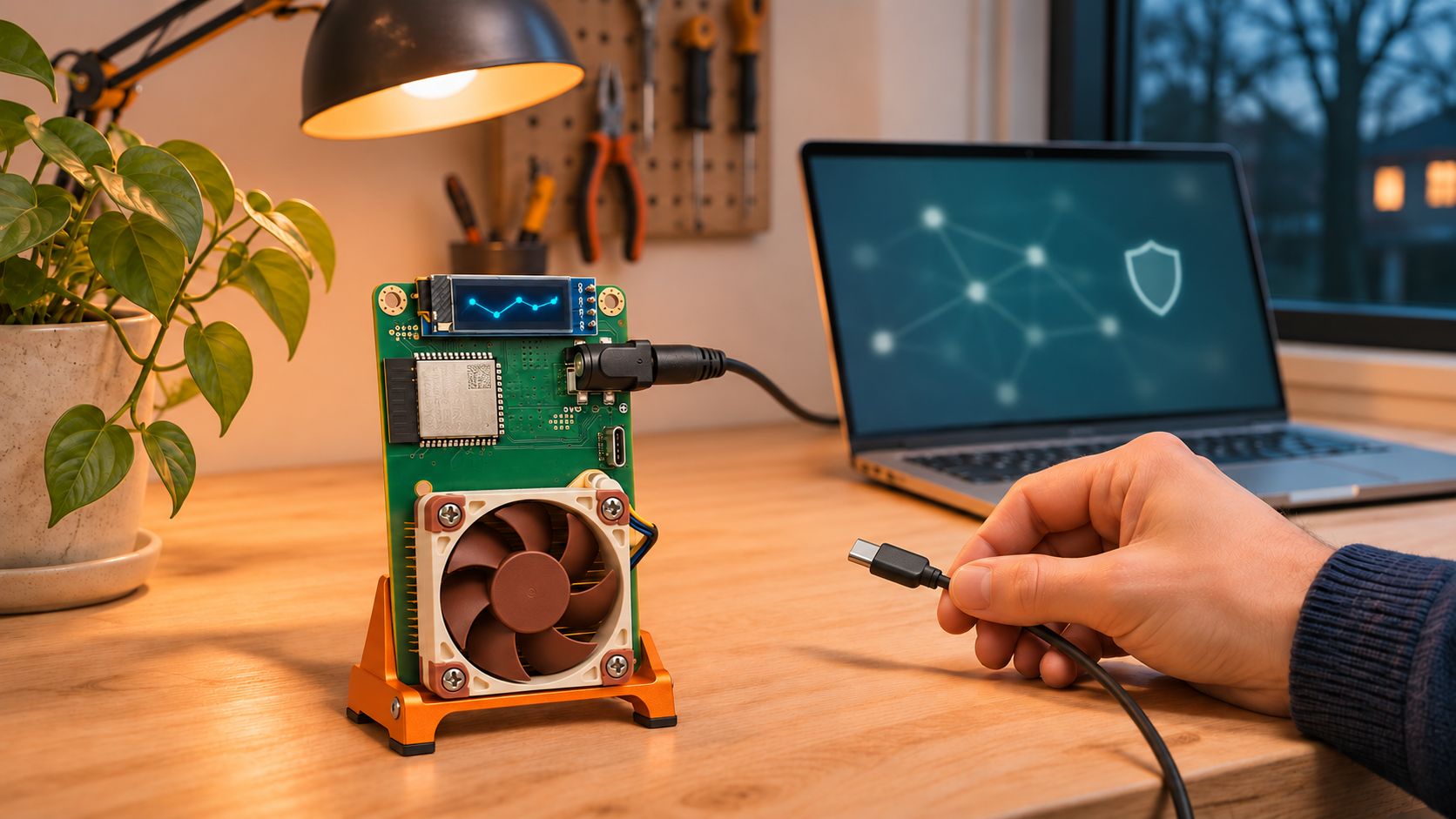
This month’s Bitaxe news includes a firmware security update, a useful way to compare mining hardware, and some headlines that deserve a closer look.
For readers running a miner at home, I think the most useful question is straightforward: what should I actually do differently? Here is what stands out as of November 13, 2026.
ESP-Miner 2.15.4: a security update worth reviewing
ESP-Miner 2.15.4, released October 21, is the latest stable release at the time of writing. Its main advertised change addresses the certificate trust store following the eMudhra compromise.
That sounds rather technical. In practical terms, the trust store contains certificates the firmware uses to decide whether a secure connection can be trusted. The maintainer’s explanation identifies pool connections using Stratum TLS with system certificates as the relevant case.
This is a security maintenance release, with no advertised hashrate improvement. It is worth reviewing even if your miner appears to be running normally.
Before updating, save your settings and identify the exact board and firmware you are using. Follow the instructions for that hardware and release. Mainline ESP-Miner instructions do not automatically apply to Nerd-family firmware or other custom versions. Afterward, check the reported firmware version, pool connection, temperatures and accepted shares.
For a step-by-step decision process, see Should You Update Bitaxe Firmware? A Low-Risk Decision Process.
Comparing miners: look beyond the sticker price
Bitaxe Radar is a comparison resource worth knowing about. When checked for this update, it listed 35 miners across 11 shops, with 41 listings marked in stock. The site says its listings are checked every six hours.
Those numbers will change, so I would use it to make a shortlist rather than treat it as a final purchasing answer. It is independent of Bitaxe and OSMU, and some merchant links are affiliate links.
A low advertised price is only part of the comparison. Before ordering, check:
- The exact model and board revision.
- Whether a suitable power supply is included.
- Shipping, taxes and the currency being quoted.
- Warranty terms and who provides support.
- The merchant’s current stock and delivery estimate.
For Canadian buyers especially, a price in U.S. dollars can look quite different once the complete delivered cost is calculated. Listed power consumption and mining estimates also need to be understood as figures supplied by the resource or seller, rather than measurements made here.
A successful hash does not always mean a solo payout
Recent coverage has highlighted miners finding Bitcoin blocks. Those stories are interesting, but the details matter more than the headline.
A device can supply the successful hash while mining through a pool that shares rewards under its own payment rules. That does not mean the device’s owner receives the entire block reward. The reported NerdQAxe find on Braiins, for example, needs to be understood in the context of its FPPS payout model.
Some roundups also combine small home miners with much larger operations. Their totals do not tell us what a typical Bitaxe owner should expect.
Before choosing a pool, understand how it pays participants, what fees apply and what happens if your device finds a block. A run of publicized wins does not improve an individual miner’s next-hash odds. Home mining can be interesting and educational without treating a rare result as a financial plan.
Research watch: Gamma experiments need measured results
Quantum Blockchain Technologies’ October 29 business update describes experiments using Bitaxe Gamma devices. The company says it is testing a variant of its Method B approach against Gamma devices running standard ESP-Miner firmware.
That is a company-reported research development. The announcement does not provide a measured numerical advantage for the Gamma comparison, and it does not announce a generally available Bitaxe firmware upgrade.
I would keep it on the watch list without changing a working miner on the strength of the announcement. Useful evidence would include a clear baseline, power measurements, test duration and results that others can examine and reproduce.
Open hardware makes experimentation possible. It also gives us good reason to ask for enough detail to evaluate the results.
What I’m taking from this update
My priorities for a home miner would be:
- Review the firmware security release. Match the instructions to the actual board and firmware before making changes.
- Check the complete purchase cost. Compare the power supply, support and delivered price, not just the headline number.
- Read the pool’s payout rules. Know the difference between supplying a successful hash and receiving a solo block reward.
- Let research earn your confidence. Interesting announcements are worth following; purchasing and configuration decisions need stronger evidence.
For the background behind these updates, see Bitcoin Mining with Bitaxe. The updates page collects developments that have appeared since publication.
Greg Weir
Tartanleaf
Sources and verification notes
Sources checked November 13, 2026. Firmware versions, listings and availability can change.
- ESP-Miner 2.15.4 release and certificate-store correction: primary release and maintainer information.
- Bitaxe Radar: comparison listings and the site’s update and affiliate disclosures. Prices and merchant availability should be confirmed before purchasing.
- Bitcoin.com’s solo-mining roundup: reporting includes different scales of mining operation and payout arrangements.
- Quantum Blockchain Technologies business update: company announcement, not independent verification of a Gamma performance improvement.